Taste and ripening
Reference guide
Taste and ripening
Goumi flavor is strongly shaped by ripeness and harvest timing. Two people can eat goumi from the same plant and report different experiences if the fruit was picked at different stages.
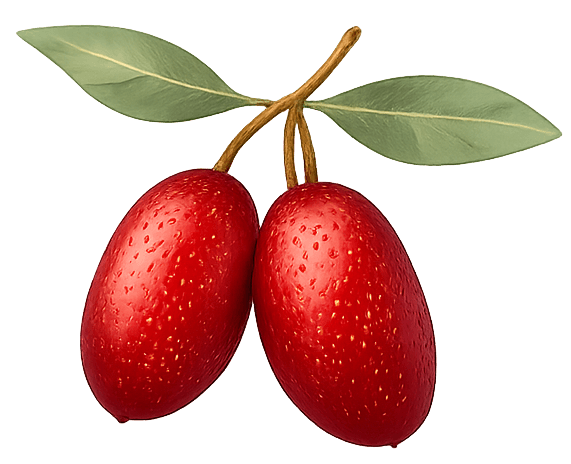
Goumi flavor at peak ripeness
At peak eating quality, goumi is typically bright and sweet tart. Berry texture ranges from firm to very juicy. Acidity tends to soften as ripeness advances, and aroma becomes more noticeable.

Why goumi is often misunderstood
Goumi can taste sharp or astringent when eaten before flavor development is complete. This is especially common when fruit is judged by color alone or harvested too early.
Goumi is also frequently misunderstood due to confusion with goji berries.
Despite similar names and appearance, goumi and goji are different fruits with different flavor profiles, ripening behavior, and typical uses. Expectations shaped by dried goji products can lead to misleading first impressions when tasting fresh goumi.
Learn more about the differences between goumi vs goji berries.
A practical ripeness model
Goumi ripeness is best evaluated using both color and behavior.
Color determines whether fruit is even eligible to be considered ripe, while texture and aroma indicate where the fruit sits within the eating window.
Color as a ripeness gate:
Green, yellow, orange: immature and not suitable for eating or harvest
Light to medium red: approaching maturity but still early
Medium to dark red: baseline for fresh eating potential
Color alone does not indicate peak eating quality, but fruit that has not reached deep red should not be evaluated for flavor.
Plant level harvest signal (most useful for fresh eating):
When the shrub is at its best for fresh eating, most berries on the plant will be medium to rich red, with very few pale or orange berries remaining across the canopy. This is typically later in the harvest window, and it often corresponds to higher juice, stronger aroma, and lower astringency across the majority of fruit.
Ripeness stages within the red range:
From ripeness to harvest decisions
Once these traits are understood, goumi behaves predictably rather than inconsistently.
Understanding ripeness is only useful if it informs when and how fruit is harvested and handled.
Continue to: Harvest and storage
Harvest and storage