Growing goumi
Reference guide
Growing goumi
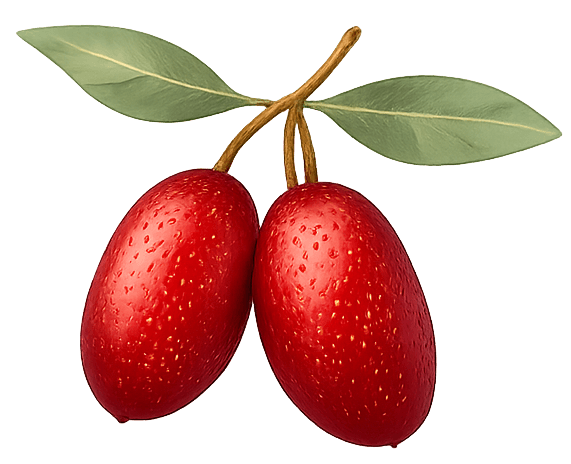
The goumi plant in cultivation
Goumi (Elaeagnus multiflora) grows as a multi stemmed, woody shrub rather than a trailing cane or herbaceous plant.
Mature plants typically form arching branches and can reach several feet in height and width if left unpruned. Growth habit varies by cultivar and site conditions.
Unlike most fruiting shrubs, goumi forms a symbiotic relationship with soil bacteria that fix atmospheric nitrogen. This allows established plants to perform well in a wider range of soils than many fruit crops and contributes to their reputation for resilience once mature.
Goumi is commonly grown as:
a home garden shrub
a hedgerow or windbreak
a small scale orchard plant

Site selection and establishment
Where goumi grows best
Goumi is highly adaptable once established, but site conditions strongly influence plant vigor, fruit quality, and long-term reliability.
Goumi performs best in:
full sun to light shade, with higher fruit quality in sunnier exposures
well-drained soils, including sandy or loamy sites that challenge many fruit crops
moderate fertility, avoiding heavily amended or nitrogen-rich soils
Because goumi forms a symbiotic relationship with nitrogen-fixing soil bacteria, it tolerates poorer soils better than most berry crops and often declines in performance when over-fertilized.
Sheltered sites with good air movement help reduce stress and support even ripening, especially in humid regions.
Establishment considerations
Young goumi plants focus energy on root and structure development before reaching consistent fruiting.
Key establishment guidelines:
allow adequate spacing for mature plant width and arching branches
avoid aggressive pruning during the first one to two seasons
prioritize weed control and soil moisture during establishment
expect limited fruit production until plants are fully settled
Once established, goumi becomes notably resilient, with reduced input needs compared to most fruiting shrubs.
Early patience is rewarded with long-term stability and predictable performance.
Plant spacing and layout
Because goumi develops a broad, arching structure, spacing should account for mature width rather than initial size.
Typical spacing considerations:
wider spacing improves airflow and harvest access
tighter spacing may be used in hedgerow or shelterbelt plantings
Plant layout should support:
access for repeated harvests
selective pruning
light penetration into the canopy
Nitrogen fixation and soil interactions
Goumi forms a symbiotic relationship with soil bacteria that can fix atmospheric nitrogen. This trait contributes to plant resilience once established, but it is frequently misunderstood or overstated.
Nitrogen fixation in goumi:
develops gradually as plants mature
varies widely by soil conditions and microbial presence
does not replace fertility management in most garden or orchard settings
In practical terms, nitrogen fixation may help stabilize plant health over time, but it should not be treated as a primary reason to plant goumi or as a substitute for soil preparation, organic matter, or nutrient management.
For growers, this trait is best understood as a supporting characteristic, not a performance guarantee.
Pruning and plant structure
Pruning influences:
plant shape
fruit distribution
harvest accessibility
Goumi fruits on older wood as well as newer growth, so aggressive annual pruning is usually unnecessary.
Common pruning goals:
remove damaged or crossing branches
maintain an open structure
limit excessive height or spread
Over pruning can reduce yield temporarily and is rarely required for plant health.
Flowering and fruit set
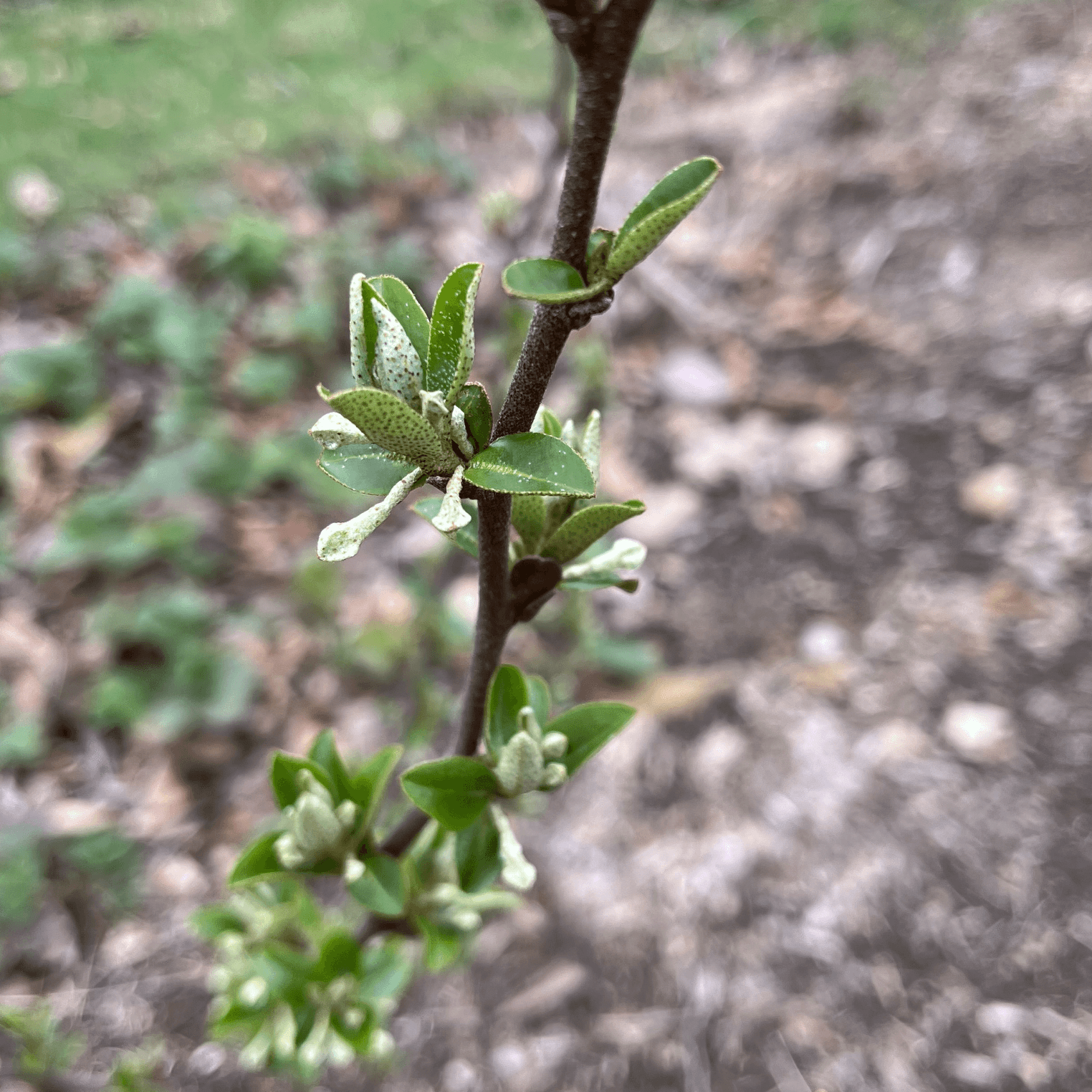
Bud development (pre-flowering)
Goumi flower buds form early in the season along both older wood and new growth. Buds are small, pale green to silvery, and often appear clustered at leaf nodes before leaves fully expand.
This stage precedes visible flowering by several days to weeks, depending on temperature and site conditions. Heavy bud formation does not guarantee uniform flowering or a single harvest window, as goumi flowers and fruits progress asynchronously.
Early bud presence is a useful indicator of plant establishment, but not a reliable predictor of final yield.
Flowering
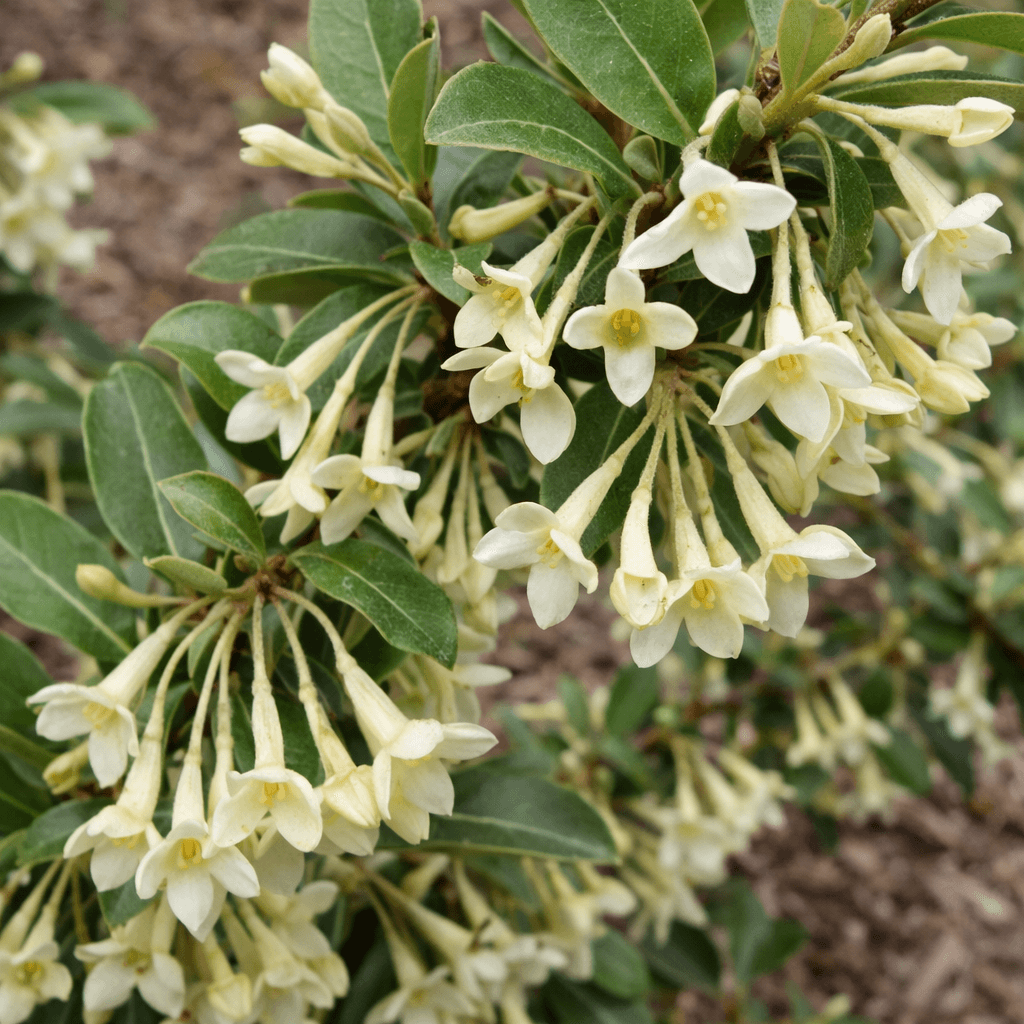
Goumi produces small, tubular, pale cream to yellow flowers that are often fragrant and appear early in the season, frequently before full leaf expansion. Flowers emerge along both older wood and new shoots, typically in clusters at leaf nodes.
Bloom timing varies by cultivar and site conditions, but flowering often precedes many other fruiting shrubs, making goumi attractive to early-season pollinators.
Flowering occurs over an extended period rather than all at once, contributing to staggered fruit development later in the season.
Pollination and fruit set
Pollination in goumi is generally reliable once plants are established, and self-fertility is common. Insect activity improves fruit set, but heavy pollinator dependence is uncommon compared to some fruit crops.
Cool, wet, or highly variable spring weather can reduce effective pollination in some regions, leading to uneven fruit set rather than total crop loss.
Because goumi fruit ripens gradually rather than synchronously, strong flowering or dense bloom does not translate into a single harvest event or uniform fruit maturity.
Field note: Heavy flowering often leads to extended harvest windows rather than larger single harvests.
Yield expectations
Goumi yield varies widely depending on:
plant age
cultivar
site conditions
pruning approach
Young plants may produce modest crops, while mature shrubs can be heavily laden with fruit over an extended harvest window.
Yield should be evaluated across multiple seasons rather than judged from a single year.
Fruit loss, birds, and drop
Birds are often attracted to ripe goumi fruit and can consume a significant portion of the crop if unmanaged.
Common approaches include:
netting during peak ripening
accepting partial losses
planting with excess yield in mind
Some fruit drop is normal, especially as berries reach advanced ripeness.
Leaf characteristics and beneficial insects
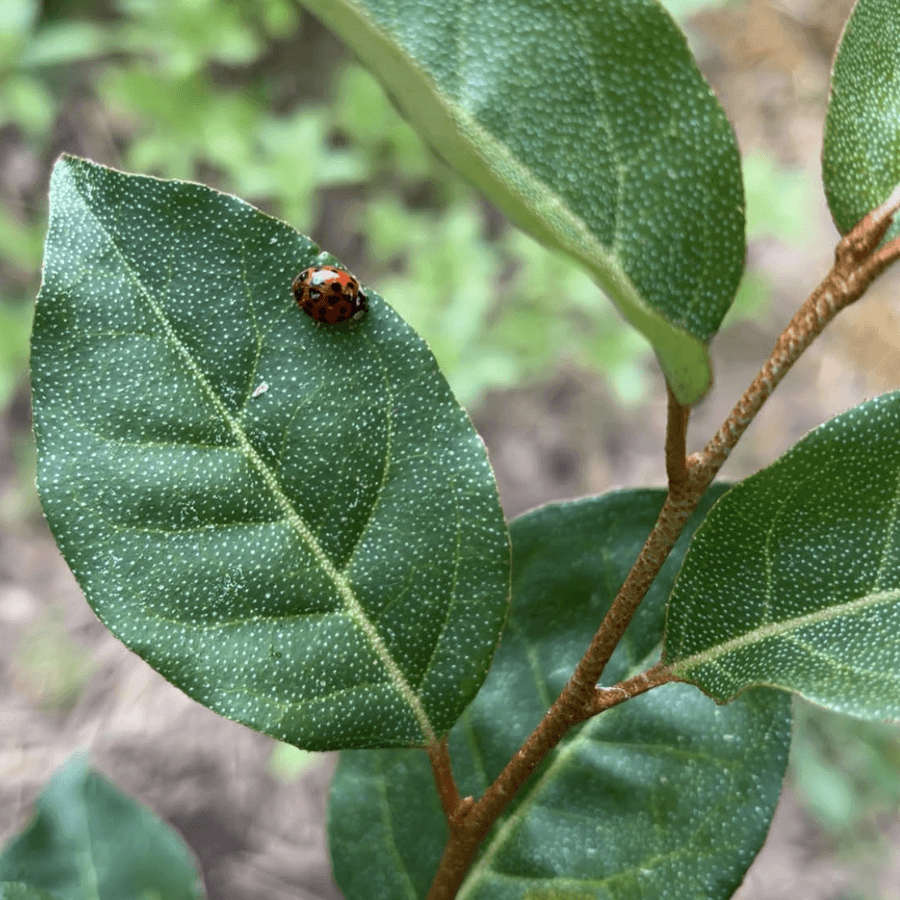
Goumi leaves have a distinctive surface texture with dense silver lenticels, which are visible on both the upper and lower leaf surfaces. These features are normal and should not be confused with disease or pest damage.
In established plantings, goumi frequently supports beneficial insects. Lady beetles and other predatory insects are commonly observed on healthy plants, particularly during periods of active growth.
Regular presence of beneficial insects may help limit aphids and other soft-bodied pests without intervention. Their presence is an indicator of a functioning garden ecosystem rather than a management requirement.
What growing goumi does not solve
While goumi is often described as low input or easy to grow, it is not maintenance free.
Growing goumi does not eliminate:
the need for repeated harvests
careful handling
realistic expectations about shelf life
Plant resilience does not automatically translate to ease of harvest or distribution.
From growing to harvest decisions
Understanding how goumi grows is only useful if it informs how plants are harvested and managed over time.
Plant structure, spacing, and pruning directly affect:
harvest efficiency
fruit damage
labor requirements
Read next: Harvest and storage for goumi berries
Harvest and storage