Standards
Reference guide
Standards
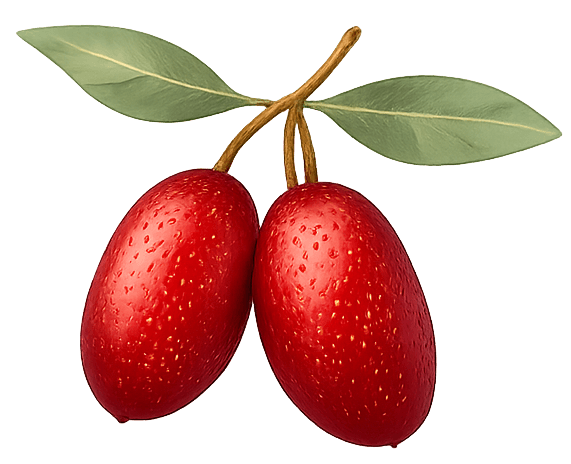
Standards on this site define how goumi berry performance is evaluated, described, and compared.
Because goumi flavor, texture, and shelf life vary widely with cultivar, ripeness, and handling, clear standards are necessary to avoid misleading comparisons and inconsistent claims.
These standards prioritize repeatability, transparency, and practical relevance over marketing language or idealized outcomes.
Why standards exist
Most disagreement about goumi quality comes from differences in:
ripeness at harvest
handling and cooling speed
evaluation timing
subjective taste descriptors
Without shared standards, two people can describe the same fruit very differently while both believing they are correct.
Standards allow observations to be:
compared across sources
interpreted within clear limits
applied more reliably in practice
Scope and limitations
These standards are designed to:
define baseline expectations, not best-case outcomes
clarify what was tested, not what is assumed
separate biological limits from handling effects
These standards do not:
guarantee flavor outcomes
eliminate natural variation
replace cultivar-specific testing
Core evaluation principles
All evaluations on this site follow a fixed set of principles. These exist to reduce ambiguity, prevent misinterpretation, and allow meaningful comparison across cultivars, seasons, and sources.
These principles are applied consistently across research summaries, field observations, and reference pages.
Ripeness is defined, not implied
Fruit is evaluated using explicit ripeness criteria. Color is treated as an eligibility threshold, not a proxy for eating quality. Evaluations account for firmness, aroma, and astringency progression in addition to color. Results are not compared across fruit harvested outside the same ripeness range.
Handling is part of the result
Flavor, texture, and durability cannot be separated from handling. Compression, transfer count, container depth, and cooling speed materially affect outcomes and are considered part of the evaluation context. Claims that omit handling conditions are treated as incomplete.
Timing is explicit
Goumi changes rapidly after harvest. Evaluation timing relative to harvest is always stated. Observations made hours apart may reflect materially different fruit states. Results describe a moment within the ripening and handling timeline, not a fixed condition.
Limits are stated
Every observation applies only within defined conditions. When results do not generalize across cultivars, ripeness stages, or handling scenarios, those limits are stated clearly. Absence of stated limits is not interpreted as broad applicability.
Comparability is prioritized over novelty
Methods favor repeatable, practical measurements rather than subjective descriptors or idealized outcomes. Novel approaches are secondary to consistency and comparability. Results are considered useful only if they can be evaluated and interpreted by others.
Nitrogen fixation claims
Nitrogen fixation is treated on this site as a biological background trait rather than a measurable performance outcome. Because fixation rates are difficult to observe directly and vary with age, soil biology, and site conditions, nitrogen fixation is not used as a proxy for yield, flavor, or soil improvement in evaluations or comparisons. Where referenced, it is presented with clear limits and without assuming agronomic benefit.
Standard ripeness references
Ripeness references used on this site align with the ripeness model described in Taste and ripening.
Evaluations reference:
color eligibility (deep ruby red baseline)
firmness and yield under light pressure
aroma presence
astringency intensity
Results are not compared across fruit that falls outside the same ripeness range.
Flavor and texture descriptors
Descriptors are used conservatively and only when tied to ripeness stage.
Common descriptors include:
sweetness intensity
acidity sharpness
astringency presence and duration
juiciness
firmness or softness
Subjective language is avoided unless anchored to a defined stage or condition.
Handling and durability standards
Handling tolerance is evaluated relative to:
harvest firmness
number of transfers
container depth and compression
cooling delay
Fruit described as “durable” or “fragile” is always evaluated in context, not as an absolute trait.
Storage references
Storage expectations are expressed as:
short-term holding behavior
texture change rate
flavor retention
No single shelf-life duration is assumed to apply across cultivars or ripeness stages.
Processing suitability
Processing outcomes are evaluated based on:
ripeness at harvest
astringency reduction through cooking
texture changes after freezing or heating
Processing suitability does not imply fresh-eating suitability.
How to interpret results on this site
When reading research summaries or field observations:
look first at ripeness and handling context
note stated limits and exclusions
avoid extrapolating beyond tested conditions
Results describe what happened, not what will always happen.
Standards evolve with evidence
These standards are not static.
As additional trials, measurements, and replicated observations become available, standards may be refined or expanded.
Changes will prioritize:
improved comparability
clearer limits
better decision support
From standards to better outcomes
Clear standards do not eliminate variability — they make it understandable.
By using shared references, growers and researchers can:
evaluate claims more critically
choose harvest timing with greater confidence
align growing, handling, and use decisions
reduce avoidable negative first impressions
Read next: Taste and ripening
or: Research and trials