Harvest and storage
Reference guide
Harvest and storage
Harvest timing and post-harvest handling matter more for goumi berries than for most fruits. Flavor quality, firmness, and shelf life are shaped by when fruit is picked and how it is handled immediately afterward.
This page focuses on practical decisions that determine whether goumi performs predictably or deteriorates quickly.
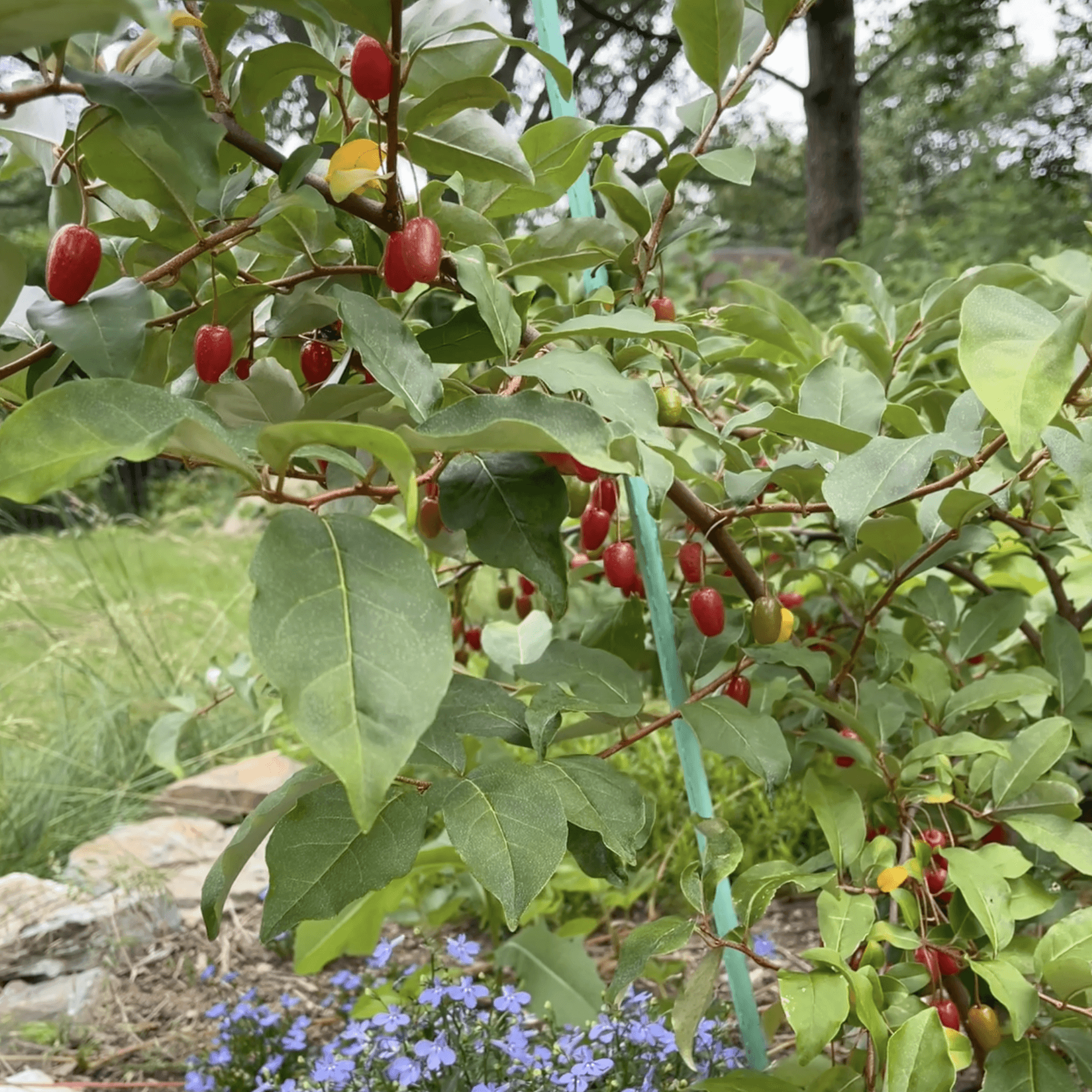
Harvest timing
Goumi berries ripen over a window of time rather than all at once. Harvest decisions should be based on ripeness stage, intended use, and handling capacity.
Fruit harvested too early may lack flavor and remain astringent. Fruit harvested too late may have excellent flavor but limited durability.
For most fresh uses, the primary eating and harvest window represents the best compromise between flavor quality and handling potential.
Harvest strategy
Because goumi ripens in waves, multiple harvest passes are common. Daily or near-daily harvests may be required on mature plants.
Key considerations:
harvest frequency
labor availability
intended use of fruit
tolerance for variation
Single bulk harvests are rarely appropriate for goumi.
Handling and bruising
Goumi berries are easily damaged by compression and abrasion.
Handling best practices:
harvest into shallow containers
avoid stacking fruit deeply
keep fruit shaded during harvest
minimize transfer steps
avoid rough sorting or dumping
Firmness at harvest determines how forgiving handling can be.
Handling tip: Carefully remove berry stems at harvest.
Leaving stems attached can puncture nearby fruit and accelerate damage in a container. For most handling, harvest by gently detaching the berry without a long stem and avoid mixing fruit with intact stems alongside softer fruit.
Cooling and storage
Cooling speed strongly influences shelf life. Cooling should begin as soon as practical after picking, especially for fruit harvested beyond the firm stage.
Fruit intended for short holding should be cooled promptly to slow softening and flavor decline. Fully ripe fruit remains fragile even under refrigeration and should not be expected to store for extended periods.
Shelf life varies widely by:
ripeness at harvest
cooling speed
cultivar
handling quality
There is no single storage duration that applies to all goumi fruit.
Packaging principles
Packaging should prioritize protection over volume.
Avoid containers that encourage deep fills or compression under their own weight.
Effective packaging:
limits compression
maintains airflow
supports small batch harvests
matches expected shelf life
Packaging designed for long-chain grocery distribution is often incompatible with peak-quality goumi fruit.
Realistic expectations
Fresh-market goumi remains challenging due to labor demands and short shelf life at peak flavor.
Processing or direct-use pathways often align better with goumi’s ripening behavior.