Goumi berry
flavor, ripening, growing, and what makes goumi different
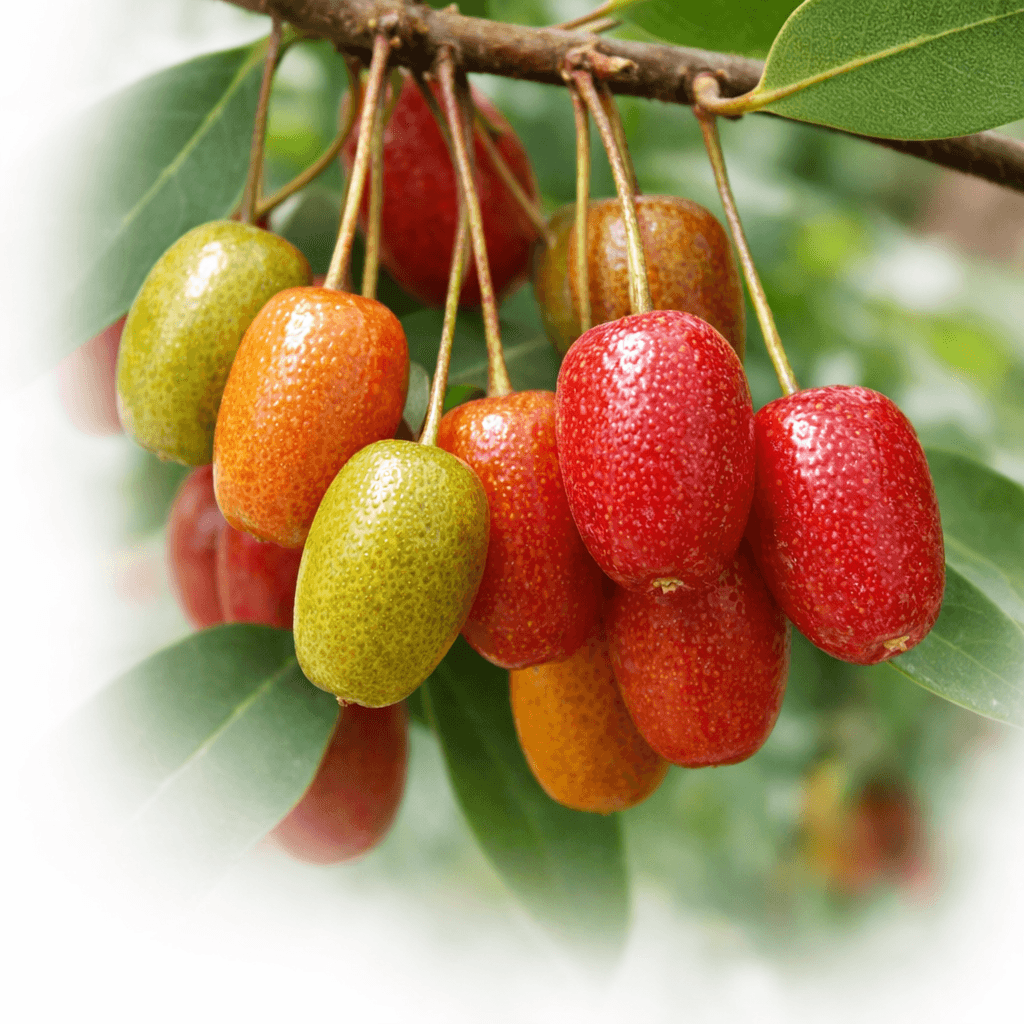
A goumi berry is the fruit of Elaeagnus multiflora, a hardy shrub that produces red, speckled berries with a bright, sweet-tart flavor when properly ripe. Goumi is an uncommon fruit in North America, and its flavor and eating quality depend more on ripening and harvest timing than most people expect.
When goumi berries are harvested and handled well, they can be juicy, aromatic, and complex. When timing is off, the same goumi berries can taste sharp or astringent. Understanding ripeness is essential to understanding goumi.
What makes goumi different from other berries
Goumi berries differ from most grocery-store berries in both plant biology and fruit behavior, which affects how goumi is grown, harvested, and evaluated.
Goumi berries are sometimes confused with goji berries, though the plants, fruit structure, ripening behavior, and flavor are distinct.
Three characteristics define goumi:
Nitrogen-fixing shrub
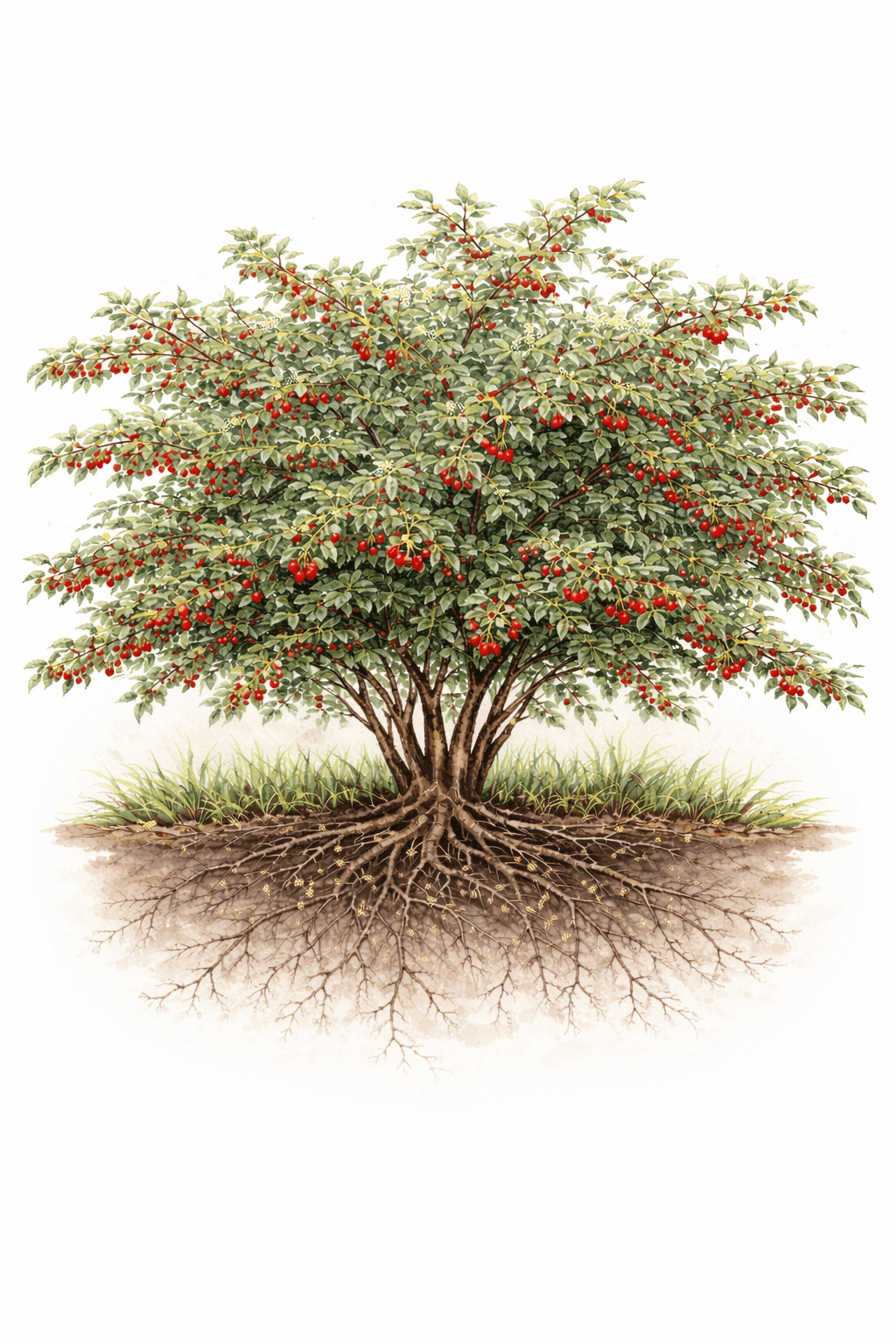
Unlike most berry crops, goumi (Elaeagnus multiflora) grows on a nitrogen-fixing shrub. This allows goumi plants to establish in a wider range of soils and contributes to their reputation for resilience once mature.
Distinct nutrient profile
Goumi berries have pigmented skins and dense flesh that place goumi within the broader category of red fruits studied for bioactive compounds. Cultivar choice and ripeness shape the final nutritional outcome.
Non-uniform ripening
Goumi berries ripen gradually over one to two weeks rather than all at once. Eating quality changes with timing, and berry color alone is not a reliable indicator of readiness or peak flavor.
Once these traits are understood, goumi behaves predictably rather than inconsistently.
Growing goumi plants
Goumi berry shrubs can be grown successfully by home gardeners and at small commercial scale, but results depend on site conditions, cultivar choice, and expectations.
Home gardeners
Orchards and commercial trials
Ripening and eating quality
Ripeness influences goumi flavor more than any other factor, thus harvest timing is very important.
Goumi berries change dramatically across the ripening window
Astringency decreases as ripening progresses
Flavor balance depends on harvest timing, not color alone
Understanding how goumi ripens explains why eating quality varies so widely and why early impressions are often misleading.
Verified performance
Because goumi berry quality varies widely, we publish transparent standards for what we consider a reliable goumi experience. These standards focus on:
• repeatable flavor outcomes
• realistic handling expectations
• conservative, evidence-based claims
They are meant to clarify what works, not to oversell.
How to use this site
Goumi berries are an uncommon fruit, and outcomes depend on cultivar, ripeness, and handling. This site is organized to help you understand goumi berry flavor and ripening, grow goumi berries successfully, and evaluate fruit quality using conservative, evidence-based standards.
Looking for clarity over hype? See standards for how goumi berry performance is evaluated.